
By: Valentina Dimova
As concern for the environment continues to grow, so does the need for education and action. Through its Outdoor Education and ESG (Environmental, Social, and Governance) Programs, Adventure Korea offers unique, hands-on experiences that help participants understand real-world environmental challenges, one of the most important being microplastic pollution.
Set in a natural, coastal environment, the microplastic investigation activity is designed to raise awareness, spark curiosity, and encourage change. Participants are not just learning about the issue from a distance, but they’re out in nature, actively collecting, observing, and analyzing microplastics in the environment. This eye-opening activity is perfect for students, educators, and eco-conscious groups who want to strengthen their connection to nature while understanding the long-term impact of human behavior.
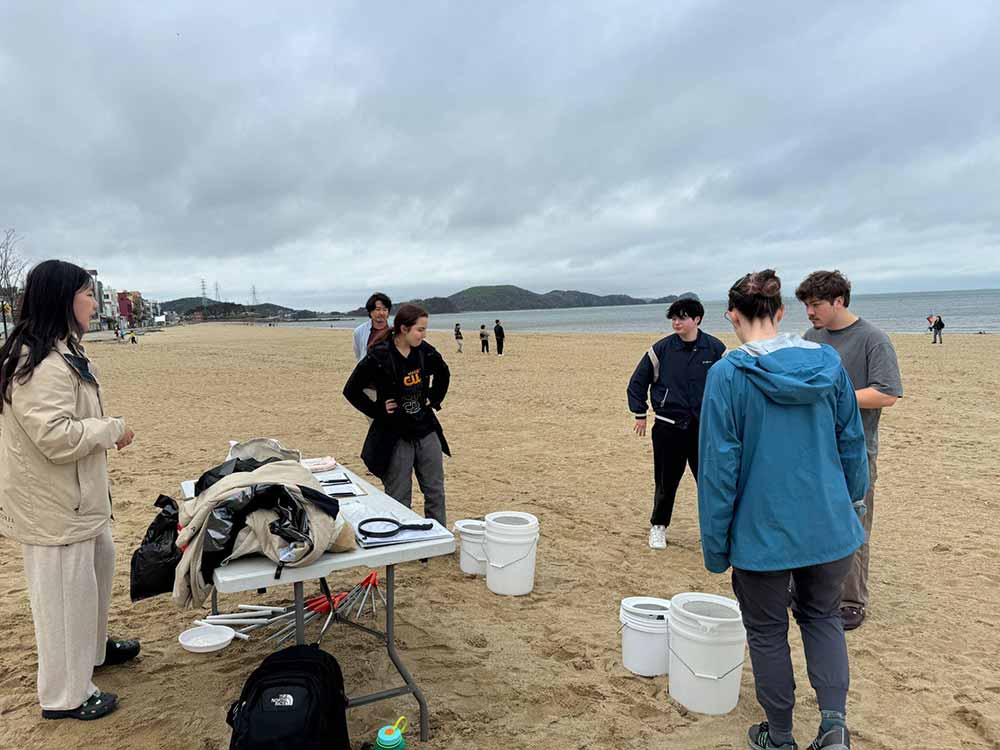
On a gloomy Saturday, the group headed to a quiet beach near Incheon, the setting for an impactful environmental activity that goes far beyond a simple cleanup. As part of Adventure Korea’s Microplastic Investigation Program, four exchange students from ISA (International Studies Abroad) joined the hands-on session aimed at raising environmental awareness. After a successful experience with students from the USA last year, ISA returned with a new group eager to take part in this meaningful activity.
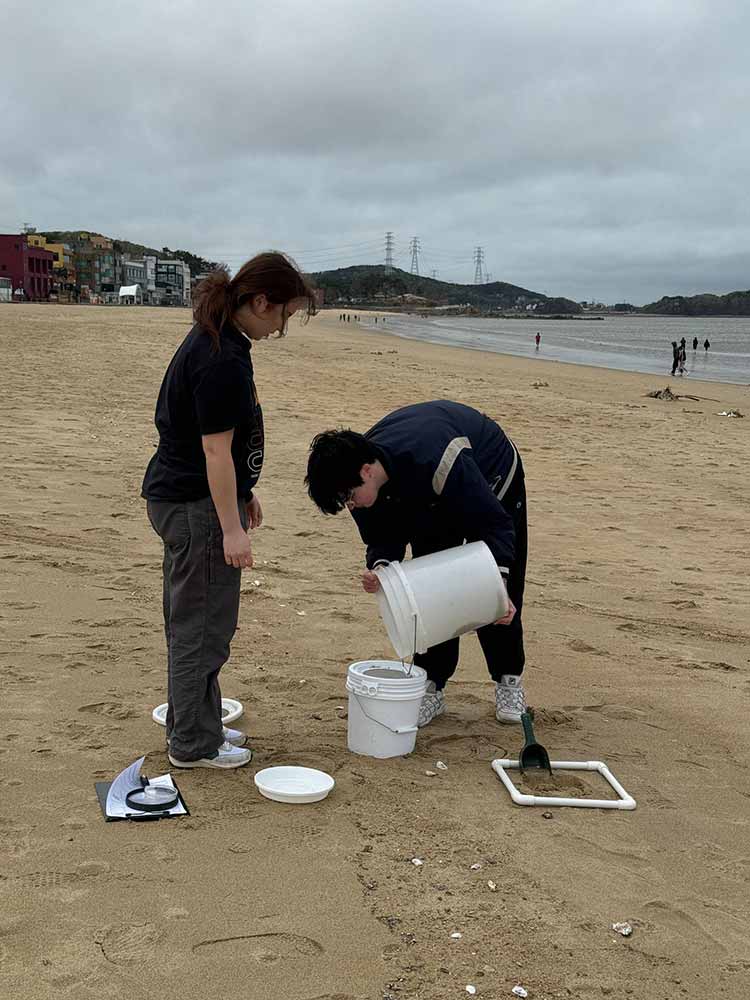
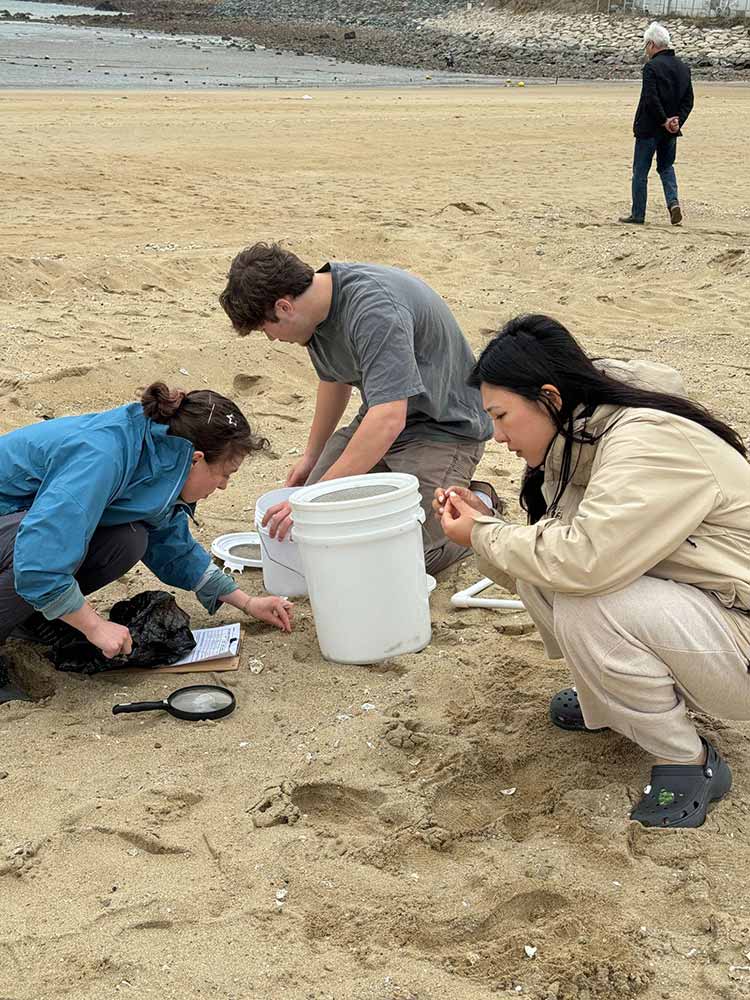
After a brief introduction from the Adventure Korea staff, who explained the purpose and process of the activity, the students began the step-by-step investigation. First, they scanned the sandy shore and started collecting tiny plastic fragments, the invisible yet harmful pollution known as microplastics. Using sieves and magnifying glasses, they carefully filtered the sand, revealing small plastic particles that are usually hidden to the naked eye.
As the students worked, they were surprised by the variety of materials they found; everything from colored plastic bits to synthetic fibers, bottle caps, and food wrappers. It was a revealing moment that showed how deeply everyday waste can penetrate even seemingly clean environments.
Throughout the activity, participants filled out a field worksheet provided by Adventure Korea, documenting their findings, answering reflection questions. The entire process lasted about an hour, but it offered a powerful, lasting impression.
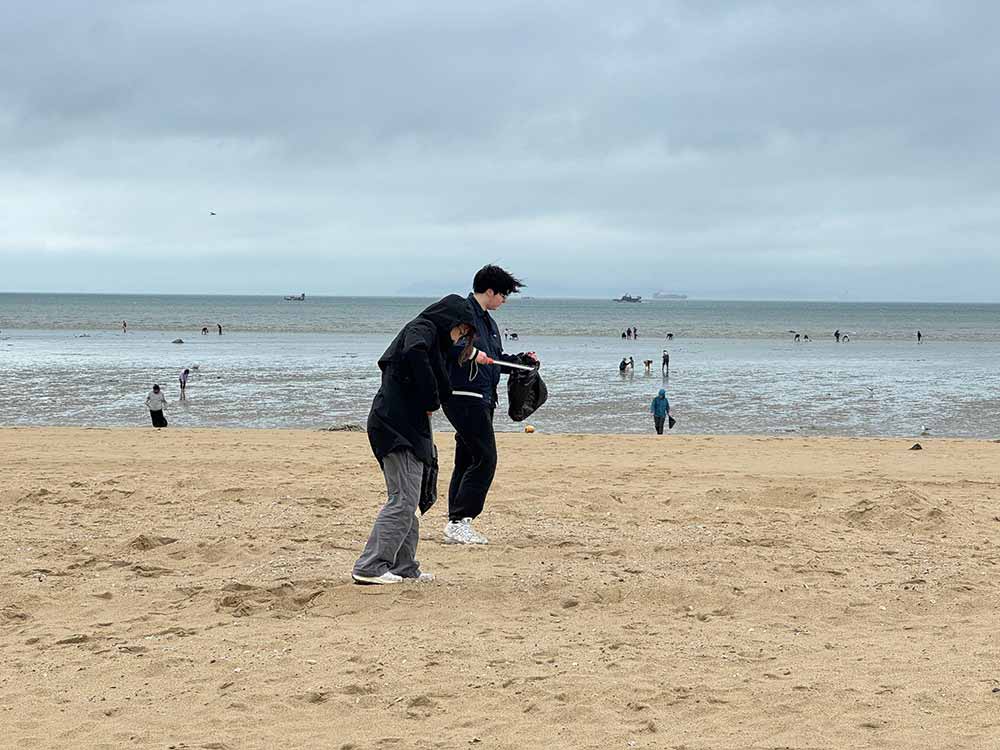
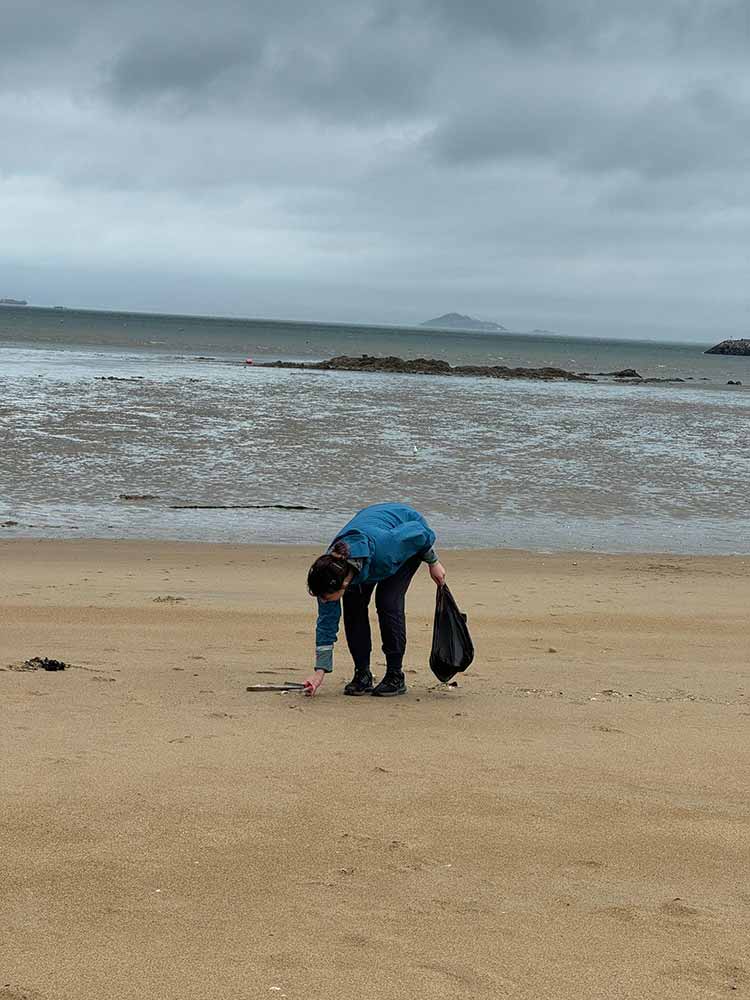
At the end, before having a group reflection talk, the students also carried out a beach cleanup, collecting as much visible trash as they could find along the shore. This final effort allowed them to make an immediate, tangible difference in the environment they had just studied.
The microplastic investigation activity is a valuable reminder of how pollution exists even in places we often overlook. By combining education with action, Adventure Korea continues to promote meaningful learning experiences that connect people to nature and inspire responsibility. This program is an ideal choice for schools, universities, and organizations looking to engage in environmental education while making a positive impact.
